
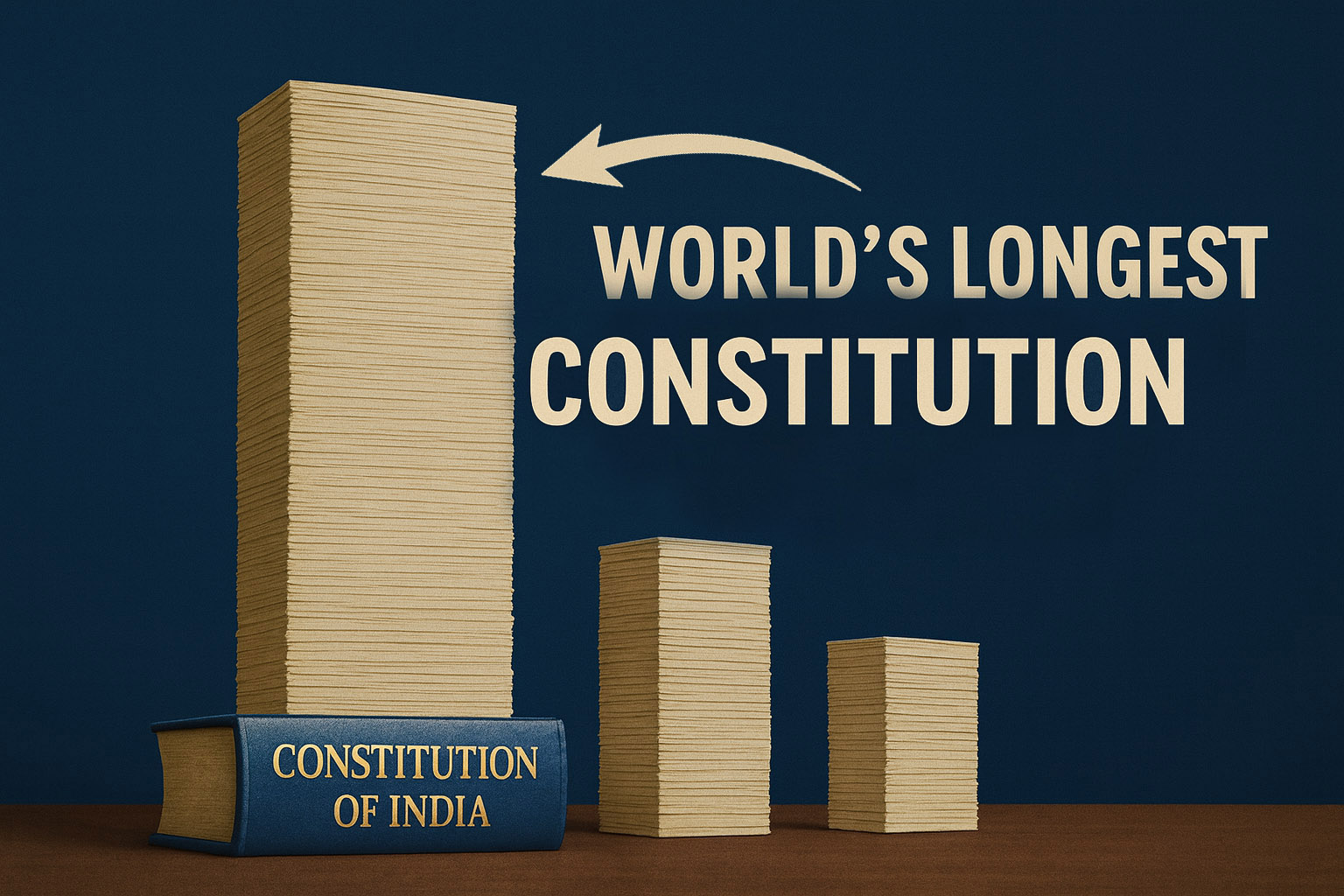
Constitution day, the Samvidhan Divas—celebrated every year on 26 November—marks far more than the adoption of the Indian Constitution in 1949.
It captures a moment when a newly liberated civilization took a breathtaking leap from centuries of colonial subjugation to an autonomous, democratic identity.
Beyond the ceremonial elegance, this day hides startling, less-spoken facts about the world’s lengthiest written constitution and the extraordinary minds behind it.
Samvidhan Divas isn’t merely a date; it’s India’s declaration of intellectual sovereignty.
1.The Drafting Took 2 Years, 11 Months, and 17 Days — And Wasn’t the Final Version
The Constitution was not drafted in haste. Official records of digital sansad document that it took 2 years, 11 months, and 17 days.
Even more astonishing: the Constituent Assembly debated it on 165 days spread across 11 sessions.
114 days were spent just for the consideration of the draft of the Samvidhan
It went through over 2,000 amendments before being finalized . This meticulous refining ensured every clause had moral weight and democratic clarity.
2. The Original Constitution Was Not Printed – It Was Hand-written
Instead of being printed, the original Constitution was hand-written in flowing calligraphy by master scribe Prem Behari, Narain Raizada.
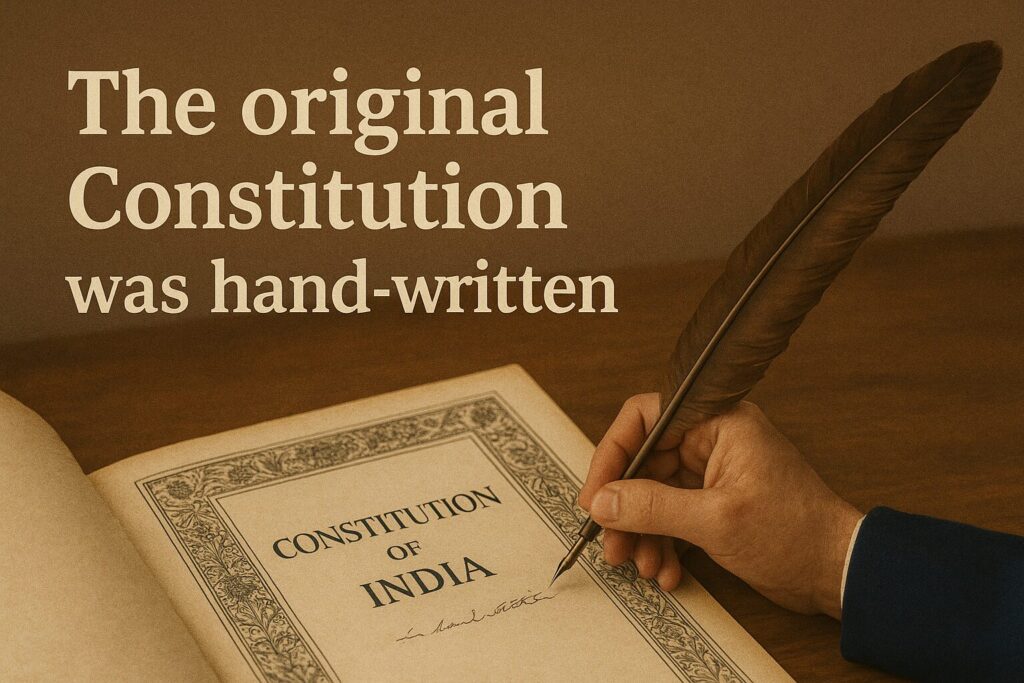
The National Archives of India (nationalarchives.nic.in) confirms that each page was decorated with intricate artwork by Shantiniketan artists — making the document both a legal foundation and an artistic legacy.
It stands today not just as a text but also as a civilizational artifact.
3. Dr. B. R. Ambedkar Was Not Merely the “Father of the Constitution” — He Was Its Moral Compass
While the Drafting Committee had seven members, archival debates from the Constituent Assembly show how Ambedkar’s comparative constitutional expertise and relentless clarity shaped major sections.
Many lesser-known accounts note how he rewrote entire sections overnight after receiving feedback. His disciplined scholarship turned India’s Constitution into a visionary yet practical blueprint.
4. Samvidhan Divas Was Revived in 2015 After Years of Being Overlooked
For decades, 26 November received little national attention. In 2015, a government notification published through the Press Information Bureau reinstated it as Constitution Day, emphasizing the need for constitutional awareness and civic responsibility.
This revival reconnected modern India with its democratic roots.
5. India Has the World’s Longest Written Constitution — For a Purpose
India’s Constitution is the longest written constitution ever framed with over 395 original Articles and now more than 448 after amendments
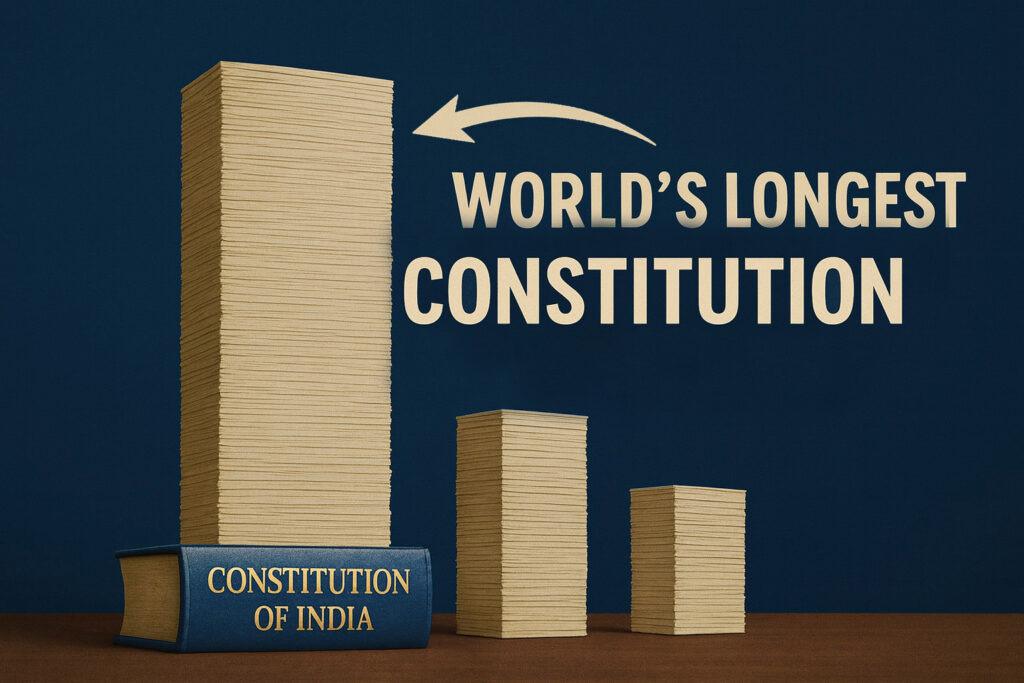
The length was not due to complexity but due to clarity and protection for an extraordinarily diverse nation.
Its detail safeguards every citizen, from remote tribal regions to metropolitan centers.
6. India’s Constitution Blends 10+ Global Models, Yet Remains Uniquely Indian
A common misconception is that the Constitution “borrowed too much” from other nations.
In truth, the framers extracted proven strengths from global democracies and then indigenized them.
Examples:
- Parliamentary system from the UK
- Fundamental Rights & Judicial Review from the USA
- Directive Principles from Ireland
- Emergency provisions from Germany
- Federal design from Canada
The framers of the Constitution reshaped every borrowed idea into something deeply anchored in Indian pluralism and civilizational ethics.
7. The Constitution Is a Living Document That Has Evolved Over Time
References from official amendments in the eGazette (egazette.gov.in) show how the Constitution grew from 395 Articles to 448 , reflecting India’s evolving governance, economy, and aspirations.
This dynamism is intentional.
The framers predicted India’s rapid transformation and built a document that could evolve without losing its core soul.
India’s Constitution is a living organism — capable of adaptation without surrendering its foundational values.
8. The Preamble’s Final Words Emerged After Fiery Debates
The historic terms Justice, Liberty, Equality, and Fraternity were vigorously discussed.
“Fraternity” was insisted upon as a non-negotiable moral anchor — a reminder that legal equality is meaningless without emotional unity.
This single word encapsulates India’s millennia-old belief that society thrives not on law alone, but on harmony.
9. The Signatures Were Added in a Unique Order — Not Alphabetical
The National Archives of India notes that members signed the Constitution state-wise, not alphabetically. This symbolized India’s federal unity and the voluntary alignment of diverse regions into one sovereign nation.
Each signature represented a personal commitment to India’s future.
10. The Adoption Date Was Strategically Chosen
26 November 1949 wasn’t accidental.
Government archives confirm that 26 November was chosen because it marked the anniversary of the 1930 Purna Swaraj Declaration, when India first proclaimed complete freedom from British rule.
Adopting the Constitution on this date was a poetic full circle — completing a long-awaited dream.
The adoption of the Constitution on the same day closed a historical loop — turning aspiration into authority.
Why Constitution Day Matters More Today Than Ever
In an era overloaded with digital noise, misinformation, and impulsive discourse, Samvidhan Divas brings citizens back to the basics:
- What freedom truly means
- Why dissent is essential
- How rights come paired with responsibility
- Why unity should never be taken for granted
This day reminds India that democracy isn’t a machine that runs on autopilot. It thrives on conscious citizenship, empathy, and constitutional awareness.
A Perspective Often Untold
The Constitution is usually spoken about in legal or political syntax, but rarely in emotional language.
Yet, behind every article lies a chronicle of pain, sacrifice, hope, and civilizational wisdom.
It is not just a governance manual — it is India’s moral autobiography.
And Samvidhan Divas is the day this autobiography comes alive.